
March is the month that decides what your border looks like in August. Light levels climb quickly, the soil starts to warm, and a packet of seed sown now will keep flowering for four or five months. Leave it until May and you lose most of that window. The trick is knowing what can go straight into the ground and what needs the shelter of a windowsill or greenhouse.
Start With the Soil
Annuals are not fussy, but they are shallow-rooted and they germinate best in a fine, firm surface. Clear the patch of weeds first, roots and all. Couch grass and bindweed left in the ground will run through the whole bed by July.
Fork over the top 15cm to break up compaction, then rake until the surface is crumbly rather than lumpy. Spread a 5cm layer of garden compost on top and let the worms pull it down instead of digging it in. Firm the finished bed by shuffling across it in small steps: seed needs contact with damp soil to germinate, and airy, loose ground dries out too fast.
Skip the fertiliser. Rich ground grows soft, floppy plants with fewer flowers; save it for the vegetables. Keep a torch by the back door for evening slug patrols — five minutes after rain is worth more than any barrier.
Hardy Annuals to Sow Straight Outside
These shrug off cold nights, so sow them where they are to flower. Aim for mid-March to early April, once the ground is workable and not frozen or waterlogged.
- Calendula (Calendula officinalis): 20–30cm apart, about 1cm deep. Flowers in 10–12 weeks and keeps going if you pick it. 'Indian Prince' has a dark centre that looks well against the orange.
- Cornflower (Centaurea cyanus): 15–20cm apart. Pinch out the growing tips of young plants for a bushier, longer-lasting display. 'Black Ball' is the deepest of the blues.
- Nigella (Nigella damascena): thin to 10–15cm. 'Miss Jekyll' is the classic, but leave a few to set seed and the striped pods will carry the border into autumn.
- Ammi majus: 30–40cm apart. Surface-sow, as the seed needs light. Its white lace is the best filler you can grow, and insects love it.
- Californian poppy (Eschscholzia californica): 20–25cm apart. It has a taproot and hates being moved, so direct sowing is the only sensible option. It wants sun and free-draining soil.
Direct-sowing method
- Rake the bed level and remove stones and clods.
- Water the day before if the soil is dry. Watering after sowing tends to wash seed into clumps.
- Draw shallow drills with the corner of a hoe, or broadcast. Most of these seeds need only 3mm of cover — barely a dusting.
- Mix fine seed with a little dry sand so you can see where it lands.
- Thin in two or three stages as the seedlings grow, watering afterwards.
Half-Hardy Annuals for a Windowsill or Greenhouse
These need warmth and cannot be sown outside until late May or June. Start them indoors at 18–21°C, in modules or small pots, roughly six to eight weeks before your last expected frost.
- Cosmos: surface-sow, because light helps germination. Pot on once roots fill the module, pinch the growing tip for a bushier plant, and give the tall types 45–60cm at the back of the border. 'Purity' and 'Rubenza' are both generous.
- Zinnia: 20–30cm apart. Sow in modules rather than seed trays — zinnias resent root disturbance. They sulk in cold, wet soil, so wait until early June if your site is exposed. 'Benary's Giant' has the strongest stems.
- Nicotiana: surface-sow. The pale 'Lime Green' lights up a dim corner, and the scent carries in the evening, which is when moths visit.
- Tithonia (Tithonia rotundifolia): a big plant, so allow 60–90cm. The orange flowers are a magnet for butterflies in late summer. Do not overfeed it, or you will get leaves instead of flowers.
- Sunflower: sow late March under cover, or direct in April and May. Dwarf branching types suit a border at 30–45cm apart; tall single-stem varieties need 45–60cm and a sheltered spot out of the wind.
Spacing That Actually Matters
Crowded seedlings look harmless in April and turn into a mildew-ridden tangle by July. Air moving between plants is the cheapest disease prevention there is.
- Nigella: 10–15cm
- Cornflower: 15–20cm
- Calendula and zinnia: 20–30cm
- Californian poppy and ammi: 20–40cm
- Cosmos and nicotiana: 30–45cm
- Tithonia: 60–90cm
Pairings That Keep Pollinators Coming
Bees and hoverflies work a border in layers, so give them something open and single-flowered at every height. Doubles and heavy ruffles look handsome but offer very little.
Try ammi with cornflower and a few calendulas at the front, then cosmos and nicotiana behind them. Add tithonia as a late-season anchor: it flowers when much else has finished, and butterflies will find it from across the garden. Nigella bridges the gap in early summer while the half-hardy plants are still filling out.
Sow in short repeated patches rather than one long row. Grouped plants are easier for insects to locate, and gaps matter less when something is always in flower.
Aftercare Through Summer
Water at the roots in the morning, and only when the top few centimetres are dry. A mulch of compost or grass clippings after planting keeps moisture in and weeds down.
Deadhead every few days — cosmos and zinnia especially will simply stop flowering if you let seed set. Pinch out the tips of cosmos, zinnia and nicotiana while the plants are young, and you will get several stems instead of one. Stake tall varieties before they need it, with three canes and a loop of twine; trying to prop up a collapsed plant always looks like a repair job.
Feed half-hardy annuals lightly, if at all. Strong growth is weak growth: tall, thin stems and small flowers.
Your March Sowing Plan
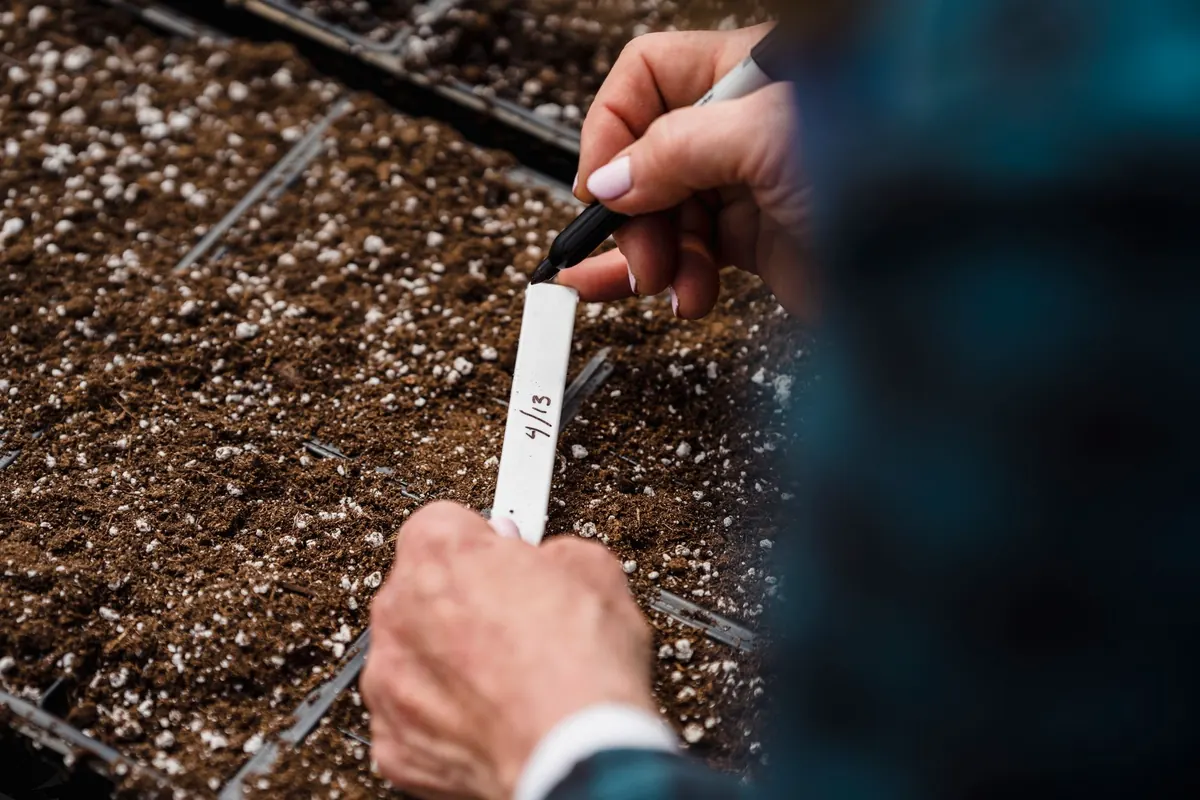
In the next fortnight, order or sort your seed, prepare the bed, and sow the hardy annuals directly where they are to flower. Then fill a tray or two indoors with cosmos, zinnia, nicotiana and tithonia. Label everything, including the date, and keep the compost damp but not soaked.
Harden off your indoor-raised plants over seven to ten days in May, moving them outside by day and back in at night, before planting them into their final positions. Do that, keep picking and deadheading, and the border will still be worth photographing in September.
Photo: Greta Hoffman / Pexels