
Ask a room of new plant owners what killed their last houseplant and most will say watering. Look a little closer and light is usually the real culprit. A plant in a bright spot drinks its compost dry within days; the same plant in a dim corner sits in wet soil for a fortnight, and the roots rot. Light also decides how compact a plant grows, whether variegated leaves hold their patterns, and whether anything ever flowers. The encouraging part is that matching plants to windows is straightforward once you understand what your window is actually doing. Here is how to read the four directions in a British home.
Why light matters more than you think
Light is a plant's food. Not in a poetic sense — it is the energy that drives every leaf, root and new shoot. Give a plant enough of it and it grows steadily, uses water quickly, and shrugs off the odd missed watering. Give it too little and growth slows to a crawl, the compost stays damp, and pests and root rot move in.
Distance matters as much as direction. Light falls away fast as you move back from the glass, so a plant on a sill and a plant two metres across the room are living in completely different conditions. A bright windowsill in a north-facing kitchen can easily beat a gloomy corner of a south-facing living room. Direction is a useful starting point, not the whole story.
The four directions at a glance
- South — the brightest spot in the house, with direct sun for much of the day and real heat behind glass in summer. Suits cacti, succulents, jade plants, hoya and pelargoniums. Watch for scorching right at the window.
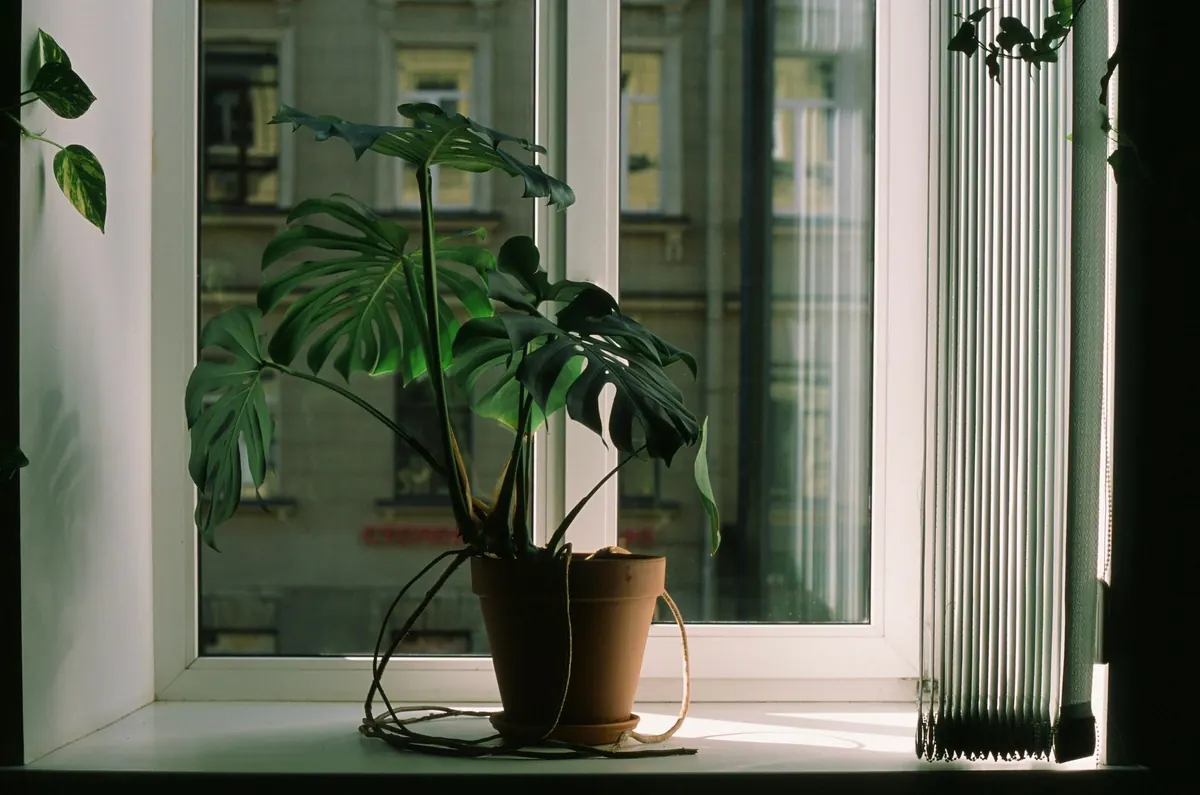
- East — gentle direct sun until roughly midday, then soft light. The easiest window for most foliage houseplants: monstera, philodendron, pothos, ferns, prayer plants and begonias.
- West — direct sun from afternoon into the evening, warm and strong in summer. Good for flowering plants and sun-lovers that sulked in an east window.
- North — steady, indirect light all day, with little or no direct sun. Fine for snake plants, ZZ plants, cast iron plants and pothos. Not the place for succulents.
Before you commit to any of this, look out of the window. A south-facing pane shaded by a neighbouring building, a mature tree or a deep balcony may behave more like an east or even a north window. Net curtains, blinds and grimy glass all take their share of the light too.
South-facing windows: bright, warm, sometimes brutal
A south window is the sunniest real estate in a British home, and in summer it can be surprisingly fierce. Sunlight passing through glass loses the cooling effect of moving air, so leaves pressed against the pane on a July afternoon can scorch even when the room itself feels pleasant.
This is the window for plants that want abundance: echeveria and other rosette succulents, aloes, jade plants, strings of pearls, cacti and flowering pelargoniums. Tropical foliage plants can live here too, but pull them back 30 to 60 centimetres from the glass, or hang a sheer voile curtain to soften the light. Expect to water more often, and check the compost weekly through summer rather than sticking to a fixed routine.
East-facing windows: the forgiving side
Morning sun is cooler and softer than afternoon sun, which makes an east window the closest thing to an easy answer for beginners. Plants get a few hours of direct light to fuel growth, then bright, indirect light for the rest of the day.
Nearly everything thrives here. Monstera, philodendron, pothos, spider plants, peace lilies, Boston ferns, calatheas and streptocarpus all do well. Variegated plants such as pothos 'Marble Queen' or variegated rubber plants keep their markings best in this kind of light — too dim and the new leaves come through plain green.
West-facing windows: strong afternoon sun
West windows stay quieter in the morning and then warm up through the afternoon. In high summer that late sun is intense and can catch tender leaves before they have hardened off, so young growth may look a little bleached in July and August.
Use them for sun-loving flowering plants, hoya, begonias, jade plants and the tougher aroids. If plants look stressed in midsummer, a sheer curtain during the hottest hours is enough. West-facing rooms also tend to be warmer, which means plants here dry out faster than you might expect — a useful thing to remember before you water on autopilot.
North-facing windows: low light, not no light
North-facing rooms have a reputation for gloom, but a north windowsill with a clear view is often brighter than a spot three metres back from a sunny window. The light is consistent, cool and indirect, which suits a good number of houseplants.
Snake plants, ZZ plants, cast iron plants, pothos, spider plants, peace lilies and many ferns cope well. What will not work: succulents, cacti, most flowering plants and anything with heavy variegation, which tends to fade to plain green. Keep plants close to the glass, turn them regularly so they do not lean, and water less often than you would elsewhere — growth is slower, so the soil stays damp for longer.
If you are unsure whether a plant is getting enough light, move it closer to the glass before you reach for the watering can.
Reading your plant: too little, too much
Plants are fairly honest about light once you know what to look for.
Signs the light is too low
Stems stretch out with wide gaps between leaves, new growth is small and pale, the plant leans hard towards the window, variegated leaves come through mostly green, and the compost stays wet for more than a week or two. Flowering stops entirely.
Signs the light is too strong
Leaves develop bleached or silvery patches, crisp brown edges appear on the side facing the glass, and foliage curls or droops in the afternoon even when the compost is moist. This is most common on south and west sills in summer, and it usually affects the leaves nearest the pane.
A cheap light meter, or a light meter app on your phone, will not give you precise readings, but it is genuinely useful for comparing one spot in your home with another. Point it at each candidate windowsill at the same time of day and note the differences.
Start with the window you have
You do not need a perfect south-facing bay to grow houseplants. You need to know what your window offers, then choose accordingly.
- Watch your window for a day. Note when direct sun arrives, when it leaves, and whether anything outside blocks it.
- Match the plant to the light you have, not the light you wish you had. Buy the snake plant for the north room, the jade plant for the south sill.
- Keep plants within a metre of the glass where you can. Move them closer in winter, when light levels drop across the UK, and slightly back in midsummer.
- Rotate every plant a quarter turn each week so it grows evenly rather than leaning into the pane.
- Wipe leaves with a damp cloth every few weeks. Dust blocks light, and clean leaves make better use of what reaches them.
Light changes with the seasons, so expect to shuffle a few pots around in October and again in April. That small bit of rearranging does more for most houseplants than any bottle of feed. Get the light right and the rest of plant care becomes considerably more forgiving.
Photo: Elena Golovchenko / Pexels