
A small back garden, a paved courtyard, a balcony that catches the sun until early evening. Most UK growers start with less space than they would like, and one of the first real decisions is where the soil is going to live. Raised beds and containers both grow good vegetables. They simply do different jobs, and the right choice depends on your budget, how often you can water, and whether you plan to stay put for a few years.
How much ground each one really takes
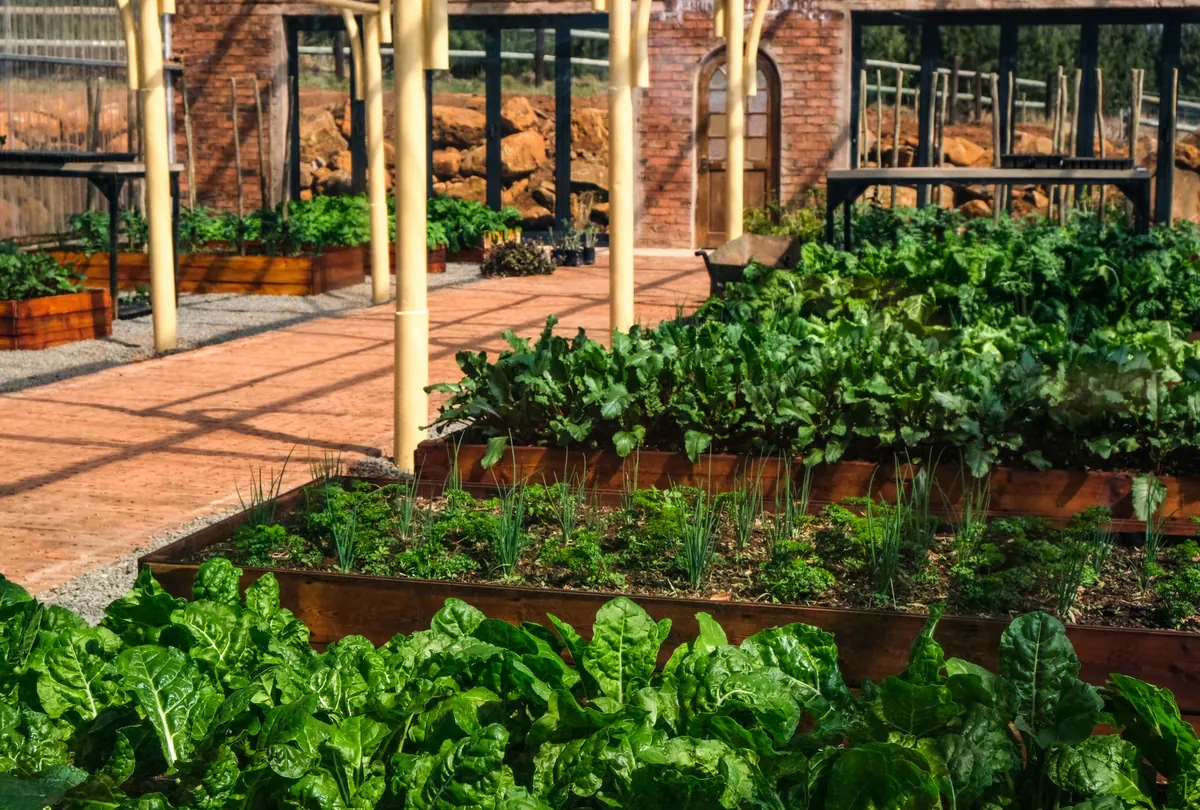
A raised bed needs room for the bed plus a path around it. That catches people out. A 2.4m by 1.2m bed is comfortable to work from both sides, but it also wants 45–60cm of clear space along its edges, so the true footprint is closer to 3.4m by 2.2m. Widen a bed beyond about 1.2m and you will be stretching over it, treading on the soil you have carefully loosened.
Containers are more forgiving. They sit on paving, gravel, steps, even a wide windowsill, and they need no path because you work from wherever you stand. The trade-off is root space. A 30cm pot is home to one tomato plant or a decent clump of herbs, and that is it. Ten pots take up roughly the same ground as one small bed but hold a fraction of the soil.
The money side
This is where the two options diverge sharply, and not always in the direction people expect.
- The frame. New tanalised timber, or sleepers, is a genuine outlay. Reclaimed scaffold boards, pallet collars or a stack of old bricks cost far less and work perfectly well.
- The fill. This is usually the biggest single cost. A bed 2.4m long, 1.2m wide and 30cm deep needs roughly 0.85 cubic metres of growing medium. Buy that in bags and it hurts; a bulk load of topsoil blended with homemade compost and well-rotted manure is far cheaper per litre.
- Pots and compost. One container is cheap. Fifteen of them, refilled each spring, is not, because bagged compost adds up quickly and usually needs replacing more often than bed soil.
- Watering. Beds can be watered with a can and a mulch. A row of pots in July may push you towards a drip line or timer, which is another cost.
Regional prices vary enormously, so get a local quote before committing either way.
Yield: what you actually harvest
Per square metre, a decent raised bed usually wins. Roots run deeper, the soil warms earlier in spring, drainage is better, and you are not walking on it. That combination suits hungry, long-season crops that would sulk in a pot.
Best in a raised bed
- Carrots, parsnips and beetroot, which need 25–30cm of loose soil to grow straight
- Brassicas — cabbages, sprouts, kale — under netting against pigeons and cabbage white butterflies
- Courgettes, runner beans and climbing French beans
- Maincrop potatoes, which want depth and a lot of it
- Sweetcorn, planted in a block rather than a row
Happy in a container
- Salad leaves, rocket and radishes, which finish fast and can be resown every few weeks
- Herbs: mint (in its own pot, always), basil, thyme, rosemary, chives
- Cherry tomatoes, chillies and peppers in a sunny, sheltered spot
- Dwarf French beans, mangetout and strawberries
- Short-rooted carrots such as 'Paris Market' or 'Chantenay' in a deep pot
Watering, feeding and the summer reality check
Raised beds dry out from the sides as well as the surface, so during a dry spell in July you may be watering most days. Containers are worse. A black plastic pot in full sun can go from damp to bone dry in a single hot day, and small pots may need attention morning and evening.
Four habits make a real difference. Mulch beds with compost or grass clippings to slow evaporation. Choose the largest containers you can accommodate, because a 45cm pot holds moisture far better than a 20cm one. Group pots together so they shade each other, and stand them out of the wind. Saucers and self-watering reservoirs buy you a day or two of freedom, which matters if you work away from home.
Feeding differs too. Bagged compost carries enough nutrients for roughly six weeks, after which container plants need a regular liquid feed. Bed soil is topped up annually with compost or manure and generally looks after itself.
Flexibility, moving and crop rotation
Containers win here without much argument. They follow the sun around the garden, move into a greenhouse for winter, and travel with you when you move house — worth thinking about if you rent, since a landlord is far more likely to accept pots on a patio than a timber frame fixed to the lawn.
Beds are fixed, and that makes rotation harder on a small plot. Even so, moving your brassicas, roots and legumes to a different bed each year still helps against clubroot, white rot and carrot fly. In containers you can sidestep the problem entirely by refreshing the compost, which is one quiet advantage of pots.
Why most small plots end up with both
Treat the two as a team. Put one or two deep beds in the sunniest spot for the crops that need space and time: brassicas, beans, potatoes. Then use pots for herbs by the kitchen door, salad leaves you can pick in seconds, and anything tender that benefits from being moved into shelter during a cold snap. The pots do the fiddly, quick-turnaround jobs; the beds do the heavy lifting.
Deciding for your patch
- Measure your sun. Vegetables want six hours or more in summer; shade changes everything.
- Be honest about watering. If you are out all day, fewer, bigger containers and mulched beds will serve you far better than a windowsill of small pots.
- Count the real footprint, including paths, before you buy timber.
- Work out the fill cost for a bed before you build it. It is the figure that surprises people most.
- Start smaller than feels satisfying. One 1.2m by 1.2m bed and four good pots will teach you more in a season than a half-finished plot ever will.
Then plant something this week. Salad leaves, radishes or a herb pot will give you a crop within weeks, and that first small harvest tells you more about how you like to grow than any comparison can.
Photo: Magda Ehlers / Pexels