
A bare cottage wall is wasted space. Chosen well, a climber turns it into scent through an open window, something to cut for the kitchen table, and a frontage that looks settled rather than newly planted. Choose badly and you spend years coaxing a sulking plant that never quite gets going.
For most UK cottage gardens the shortlist comes down to two: a climbing rose or a climbing hydrangea. They are not interchangeable. One wants sun and attention, the other shrugs off shade and mostly looks after itself — and knowing which you actually need is most of the decision.
Start by reading the wall, not the plant
Before you look at a single variety, stand outside and answer three questions. How many hours of direct sun does the wall get in midsummer? Which direction does it face? And what is growing at its feet?
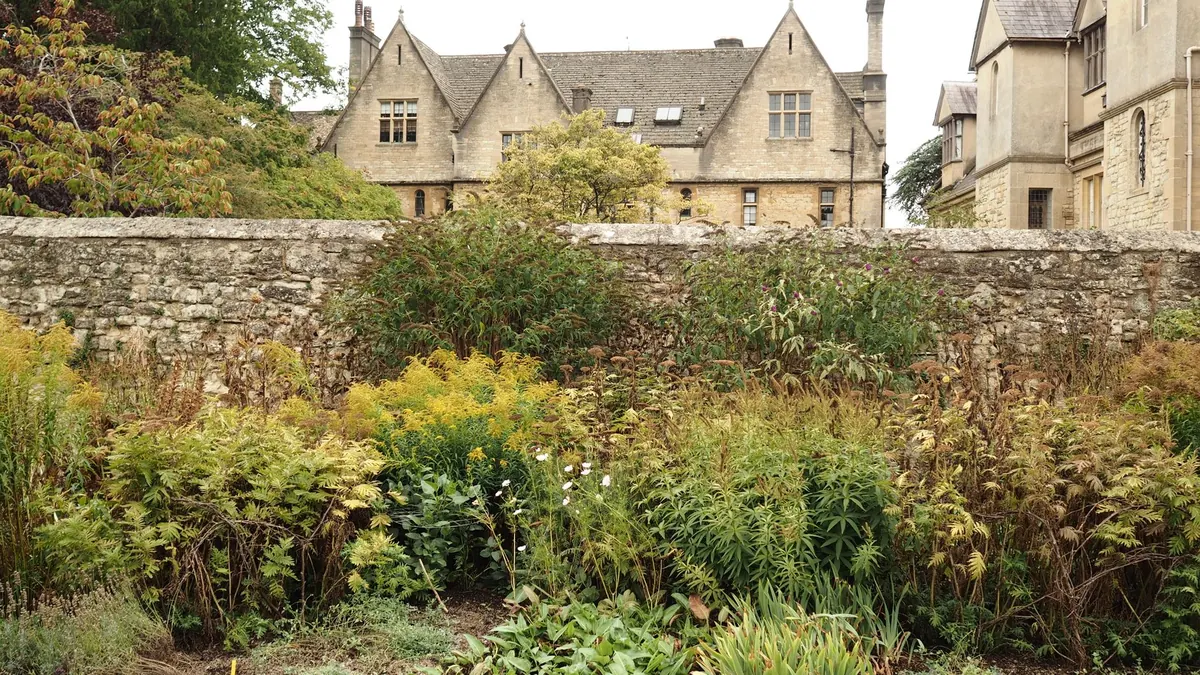
A south- or west-facing wall with five or six hours of sun is rose territory. It warms up early, ripens the wood, and gives you the long repeat season roses are capable of. A north- or east-facing wall, or one shaded by a neighbour's hedge for most of the day, is where roses struggle: you get spindly growth, few flowers and blackspot with depressing regularity.
That shaded wall is exactly where a climbing hydrangea earns its place. It will flower on a north aspect, which very few flowering climbers will do.
Do look at the wall's condition, too. Climbing hydrangeas cling with aerial roots, which on sound brick or stone is rarely a problem. On old lime render, loose mortar or a thinly applied modern render, those roots can do real damage. If the wall is old or the render already crumbly, have a builder or surveyor look at it before planting anything self-clinging.
Climbing roses: the sun-lover's reward
Roses give you three things a hydrangea cannot match: scent, cut flowers and a long season. Repeat-flowering climbers such as 'Gertrude Jekyll' or 'Iceberg' start in early summer and keep going into autumn with flushes in between. 'Madame Alfred Carrière' and the thornless 'Zéphirine Drouhin' are the two to consider if the wall is only in part sun — they tolerate less than most. Ramblers like 'New Dawn' or the enormous 'Kiftsgate' flower once, spectacularly, in early summer, then spend the rest of the year as foliage.
Flowering season and scent
Scent varies enormously between varieties and is not something you can judge from a label photograph. If you can, visit a nursery in June and smell the plants in flower. As a rule, the older, softer-petalled varieties scent better than the stiff, disease-resistant modern sorts.
Pruning and upkeep
This is where roses ask for your time. For repeat-flowering climbers:
- Prune in late winter, roughly January to February, while the plant is dormant.
- Build a permanent framework of stems, tied to horizontal wires, and cut the sideshoots back to two or three buds.
- Take out one or two of the oldest stems at the base each year to keep it young.
- Tie in new growth through summer rather than letting it flop.
- Deadhead regularly to keep flowers coming, and feed and mulch in spring.
Ramblers are pruned differently: leave them alone until they have flowered, then cut out the wood that has just bloomed in late summer. Expect to deal with aphids in spring, blackspot on susceptible varieties, and on some ramblers the sawfly larvae that roll the leaves into little cigars. Good air circulation against a wall helps more than any spray.
Climbing hydrangeas: slow, steady, shade-proof
Hydrangea anomala subsp. petiolaris is the one to grow in the UK. It is deciduous, self-clinging, and produces flat white lacecap heads from mid to late summer. It flowers happily on a north or east wall, needs no tying in, and is largely untroubled by pests.
What it will not do is hurry. Expect two or three years of almost nothing while it establishes, then a sudden rush of growth once its roots are settled. Given time it will cover a very large wall — 10 metres or more — so keep it away from gutters, downpipes and window frames you want to see. There is an evergreen climbing hydrangea, Hydrangea seemannii, but it needs a very sheltered, mild spot and is not a safe bet in most of the country.
Flowering and foliage
The flowers are not for cutting in any meaningful way and carry little scent. What you get instead is foliage: fresh green shoots in spring, heart-shaped leaves that turn buttery yellow in autumn, and dry brown flower heads that hold their shape through winter. It is a plant for structure and texture, not for vases.
Pruning and upkeep
Minimal. Cut flowered shoots back to a strong pair of buds straight after flowering in late summer, and remove one or two old stems from the base every few years if it becomes dense. Do not prune in spring — you will cut off the season's flowers. A mulch of garden compost in spring is plenty.
Head to head
- Aspect: Roses need sun — four to six hours minimum. Climbing hydrangeas flower in shade.
- Support: Roses need wires and tying in. Hydrangeas cling by themselves.
- Flowering: Roses run from June into October with scent. Hydrangeas flower once, for six to eight weeks, and leave decorative seedheads.
- Pruning: Roses need winter pruning plus summer tying and deadheading. Hydrangeas need a tidy-up after flowering.
- Pests and disease: Roses attract aphids and blackspot; hydrangeas are mostly left alone.
- Speed: A rose flowers in its first or second year. A hydrangea can take three years to look like anything.
- Best for: Roses suit a sunny front wall where you want cut flowers. Hydrangeas suit a north wall or an awkward shaded corner.
Planting and the first two years
Plant bare-root roses between November and March; container-grown plants can go in whenever the soil is workable. Dig a hole twice the width of the rootball, fork the base, mix in well-rotted compost, and plant so the graft sits just below soil level. Water thoroughly, mulch, and keep watering through the first two dry summers.
Tie rose stems out horizontally rather than straight up. Bent stems flower along their whole length; vertical ones flower only at the top.
Climbing hydrangeas want moisture-retentive soil and dislike drying out at the roots, which is the usual reason young plants fail. Mulch generously and water in dry spells for the first two seasons. Plant slightly away from the wall, angled towards it, so the roots are not in the bone-dry strip under the eaves.
So which should you plant?
If the wall gets good sun and you are happy to spend a couple of hours on it in winter and to deadhead through summer, plant a rose. You will get scent, flowers for the house and a much faster result. Choose a repeat-flowering climber for a long season, or a rambler if you have space and can live with a single, overwhelming flush.
If the wall faces north or east, sits in shade for much of the day, or belongs to a house you visit at weekends rather than tend every evening, plant a climbing hydrangea. Give it room, water it well for two years, and then leave it alone.
And if the wall is long enough for both, put the rose where the sun falls and the hydrangea in the shade beside it. They rarely compete, they flower at overlapping times, and between them you will have the wall covered from June to the first hard frost.
Photo: mingche lee / Pexels