
Garlic is one of the most generous crops a British garden can give you: a handful of cloves pushed into cold soil in autumn, a string of fat bulbs hanging in the shed by midsummer. It spends nine months in the ground, so it needs far less fussing than almost anything else on the plot — but it does notice whether you got the variety, the timing and the drainage right.
Why autumn planting suits garlic
Garlic needs a spell of cold to bulb up properly. Without it, cloves sit together in a single lump instead of swelling into distinct segments, which is why spring plantings so often disappoint. Autumn gives the roots time to establish before the frosts and a long season that finishes before summer's disease pressure builds.
In most of the UK the ideal window is mid-October to mid-November, and you can push into December as long as the ground is workable rather than waterlogged. If your soil is heavy clay that sits wet all winter, either plant later or grow in raised beds and deep containers. Garlic rots quickly in cold, soggy ground, and no amount of care rescues a clove that has already gone soft.
Hardneck or softneck?
Two broad groups are sold in the UK, and the choice matters more than any other decision you will make.
Hardneck
These send up a curly flower stem, or scape, in late spring and form a single ring of large, easy-to-peel cloves. They tend to have the boldest flavour and cope best with cold, so they suit northern gardens and exposed sites. The trade-off is storage: expect three to five months. Look for rocambole and purple stripe types, including 'Chesnok Red' and 'Lautrec Wight'.
Softneck
Softnecks rarely produce a scape, packing in several layers of smaller cloves instead. They store much better — six to nine months is realistic — and they are the ones that plait neatly. Choose them for milder, wetter parts of the country, and for any planting you do in spring. 'Solent Wight', 'Picardy Wight' and 'Germidour' are all reliable.
Buy bulbs from a garden centre or a specialist grower rather than the supermarket shelf. Culinary garlic is sometimes treated to stop it sprouting and can carry virus, which shows up as yellow-streaked, stunted plants.
Preparing the ground and planting
Choose a sunny spot that has not grown onions, leeks, shallots or garlic in the past three years. Fork in well-rotted compost a few weeks beforehand and add grit to heavy ground. Garlic wants fertile but free-draining soil, and it dislikes fresh manure.
- Break the bulb into individual cloves just before planting. Leave the papery skin on and discard anything small, soft or damaged — the fat outer cloves make the biggest bulbs.
- Set cloves 15cm apart, with 25cm between rows. Push them in pointy end up so the tip sits about 2–3cm below the surface. In clay, plant slightly shallower and drop a handful of grit into each hole.
- Water in gently, then mulch with 3cm of garden compost or straw to suppress weeds and stop frost lifting cloves out of the soil.
- In containers, use a loam-based compost mixed with grit and plant five or six cloves in a 30cm pot.
Gardeners on wet, heavy soil often do better planting in December than in October. Cold is useful; waterlogging is not.
Winter and spring care
There is little to do between November and February beyond pulling the odd weed — garlic is a poor competitor and hates being crowded. If a hard frost heaves a clove out of the ground, press it back in. From March, water in dry spells; a long dry April will cost you bulb size. Feed once in early spring if the leaves look pale, then stop by the end of May so the plant puts its energy into the bulb rather than into foliage.
On hardnecks, snap off the scapes while they are still curled and tender. This pushes energy back into the bulb, and the scapes are excellent sliced into a stir-fry. Watch for rust, which appears as orange pustules on the leaves in damp weather: remove affected leaves and keep the site open and airy. Allium leaf miner troubles some areas, and fine fleece over the crop from March to May keeps the flies off. If a plant yellows, wilts and shows white fluffy mould at the base, that is white rot. Lift and bin it, do not compost it, and grow no alliums in that spot for several years.
Getting the harvest right
Autumn-planted garlic is usually ready between late June and the end of July, with hardnecks finishing first. Do not wait until every leaf has gone brown; by then the bulbs will have split their skins and will not store. The signs you want are the lower leaves yellowing and dying back, the tops flopping over, and the bulbs visibly swelling. Lift one to check before committing to the whole row.
Pick a dry day and lift with a fork, working well below the bulbs. Pulling by hand damages the base and shortens storage life. Brush the soil off with your hands rather than washing it, and resist trimming the leaves at this stage.
Curing and storing
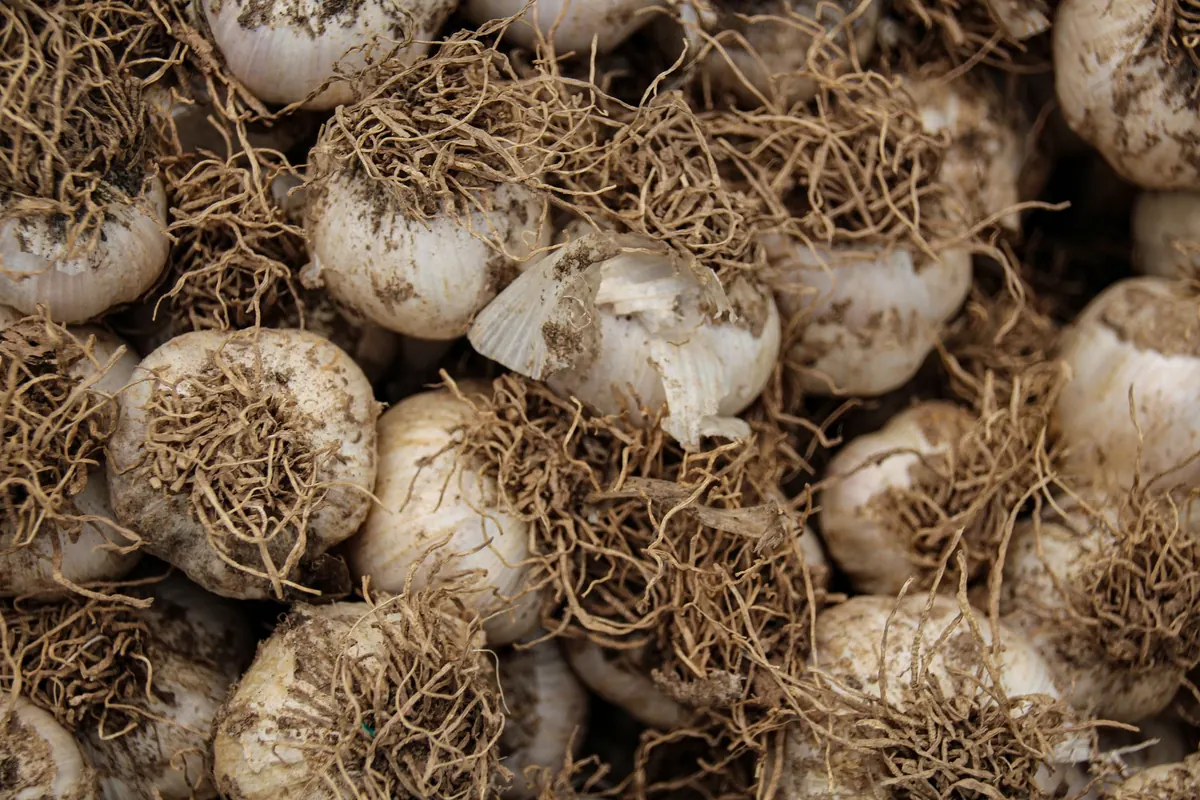
Curing is the step most people skip, and it is why home-grown garlic sometimes turns mouldy by Christmas. Spread the bulbs in a single layer, or tie them in bunches and hang them somewhere warm, dry, dark and airy — a shaded greenhouse, a shed with the door open, a garage shelf. Leave them for three to four weeks, until the skins are papery, they rustle, and the necks are dry.
Then rub off the loose outer skin and roots, and no more. Plait softnecks into a rope, or hang bunches and nets in a cool, dark, airy place. Keep bulbs out of the fridge and never seal them in plastic, which traps moisture and invites rot. Hardnecks keep three to five months, softnecks six to nine. Set aside your best bulbs for planting in October.
Your first crop: keep it simple
If you are planting garlic for the first time, a few principles will carry you through.
- Plant supermarket bulbs — they may be treated or virus-carrying.
- Bury cloves too deep in heavy soil, where they rot before rooting.
- Leave bulbs in the ground until all the foliage has died.
- Skip curing and store bulbs while they are still damp.
Do the opposite of those four things and garlic becomes one of the least demanding crops on the plot. Start with twenty cloves this autumn, and you will have plenty to cook with next summer — and enough spare bulbs to do it all again.
Photo: Rachael Holzman / Pexels