
How to Make a Wildlife-Friendly Pond in a Small Garden
A pond is the single most valuable thing you can add to a garden for wildlife. It does not need to be big. It does not need to be expensive, and it does not need a digger or a landscaper. A half barrel, an old sink, a buried washing-up bowl or a preformed liner the size of a dining table will all do the job — and the wildlife will find it surprisingly fast.
In many countries, ponds have vanished from the landscape at an alarming rate. In the UK alone, it is estimated that around a third of ponds were lost in the twentieth century, mostly through agricultural drainage and development. That makes the humble garden pond genuinely important: a mosaic of small, well-made backyard ponds can function as a network of stepping stones for frogs, newts, dragonflies and bathing birds across a whole neighbourhood.
Why Even a Tiny Pond Matters
Ponds punch far above their weight. Per square metre, they tend to support more species than almost any other garden habitat — flower borders, hedges and log piles included. The reason is simple: water is a rare resource, and it is a nursery as well as a home.
A small pond gives you, roughly in order of arrival:
- Insects first — water beetles, pond skaters, backswimmers and midge larvae colonise within weeks. Dragonflies and damselflies usually follow in the first or second summer.
- Frogs, toads and newts — they need water to breed but live most of the year on land, so a pond plus some damp, leafy shelter nearby suits them perfectly.
- Birds — a shallow, gently sloping edge becomes a drinking and bathing station, which is especially valuable in hot, dry spells.
- Bats and hedgehogs — bats hunt the insects that hatch from the water, while hedgehogs visit to drink and forage for the invertebrates living in the surrounding planting.
Then there is the quiet bonus: a healthy pond is a natural pest control unit. A single frog can eat dozens of slugs and snails a night, and the pond itself will be kept balanced by its own small army of predators.
Choosing the Right Spot
Light and shade
Aim for a spot that gets direct sun for roughly four to six hours a day. Sun warms the water, triggers plant growth and encourages insects to breed. Full sun all day can encourage algae, while deep shade all day means cold water, poor plant growth and a pond that slowly fills with fallen leaves.
Avoid siting your pond directly under a tree or hedge. Not only does the leaf fall add nutrients that fuel algae, but the roots of vigorous trees can puncture flexible liners. If you have no choice, a raised or container pond solves the problem neatly.
Practical matters
- Run-off: keep the pond clear of anywhere that fertiliser, weedkiller, patio cleaner or car shampoo might wash down. Chemicals that help your lawn will wreck your pond.
- Rainwater: position it somewhere you can easily top it up from a water butt rather than a hose.
- Access: leave one side open enough to reach in with a net. You will need to remove leaves and excess weed at some point.
- Safety: if there are toddlers in the house or visiting, choose a raised container or a strong mesh cover, or simply wait a couple of years. For most small gardens a pond 30–45 cm deep with a rigid raised rim is both safer and easier to manage.
- Viewpoint: put it where you will actually see it — beside a path, outside a kitchen window, near a bench. The best wildlife pond is the one you watch every day.
Sizing and Design for Small Spaces
Forget the idea that it must be a proper "pond". In a small garden, containers are often the smartest choice.
Container ponds
- Half barrel or whisky barrel: the classic. Around 60–90 cm across, deep enough to overwinter a few frogs, and heavy enough to stay put.
- Old ceramic sink or glazed pot: charming, and the plug hole can be sealed with silicone.
- Mortar mixing tub or trug: cheap, lightweight and easy to hide behind a few stones. Line the visible rim with pebbles or slate.
- Buried preformed liner: the neatest way to get a natural-looking shape in a small space. These come in sizes from about one square metre upward.
Flexible liner ponds
If you have a patch of ground roughly 1.5 × 2 m, a butyl or EPDM liner gives you freedom of shape and a much more natural finish. Dig to about 45–60 cm in the centre with a shallow shelf around the edge for marginal plants, line the hole with an old carpet or sand to protect the liner, and fold the edges over a soft, level rim of turf or stone. A flexible liner is the best option if you want plants to grow right to the water's edge and soften the outline.
The best small ponds are shallow at the edges and deep in the middle. Shallow water is where most of the life happens; the deeper section is the safety net when the weather turns cold or the pond dries in a hot summer.
Step-by-Step: Building Your Pond
- Position and level your container or hole. A container needs to sit absolutely level or the rim will look wrong and the water line will betray you.
- Add a shallow shelf or ramp. For containers, stack a few stones or bricks to create a gradual slope. For a liner pond, dig a shelf. This lets amphibians, hedgehogs and insects climb in and out. Without an exit route, a pond becomes a trap.
- Line the base with a thin layer of subsoil or loam. Use garden soil, not potting compost — compost is packed with nutrients and will feed algae all summer. Two or three centimetres is plenty.
- Fill with rainwater. This is the single most important tip. Tap water contains nitrates, phosphates and chlorine that kick-start algal blooms. If you must use tap water, let it stand in a bucket for 24–48 hours first, or use a dechlorinator.
- Plant straight away. Submerged oxygenators can go in immediately — they are what keeps the water clear.
- Leave it alone for two to four weeks. Let the water settle and the plants start growing before you judge it. Green water at this stage is completely normal.
- Decorate the edges. Add a few flat stones, a small log, some pebbles and a patch of gravel. These are basking spots for insects and shelter for emerging dragonflies.
Planting for Wildlife
Native plants support far more invertebrates than exotic ones, and it is invertebrates that underpin everything else in the food chain. Aim to cover roughly a third to a half of the water surface with plants, but never the whole thing — open water is essential for birds, bats and dragonflies.
Oxygenators
Fully submerged plants that release oxygen and compete with algae for nutrients. Try hornwort, water starwort or spiked water milfoil. Plant them in a small mesh basket of loam or drop a weighted bunch straight in.
Marginal and emergent plants
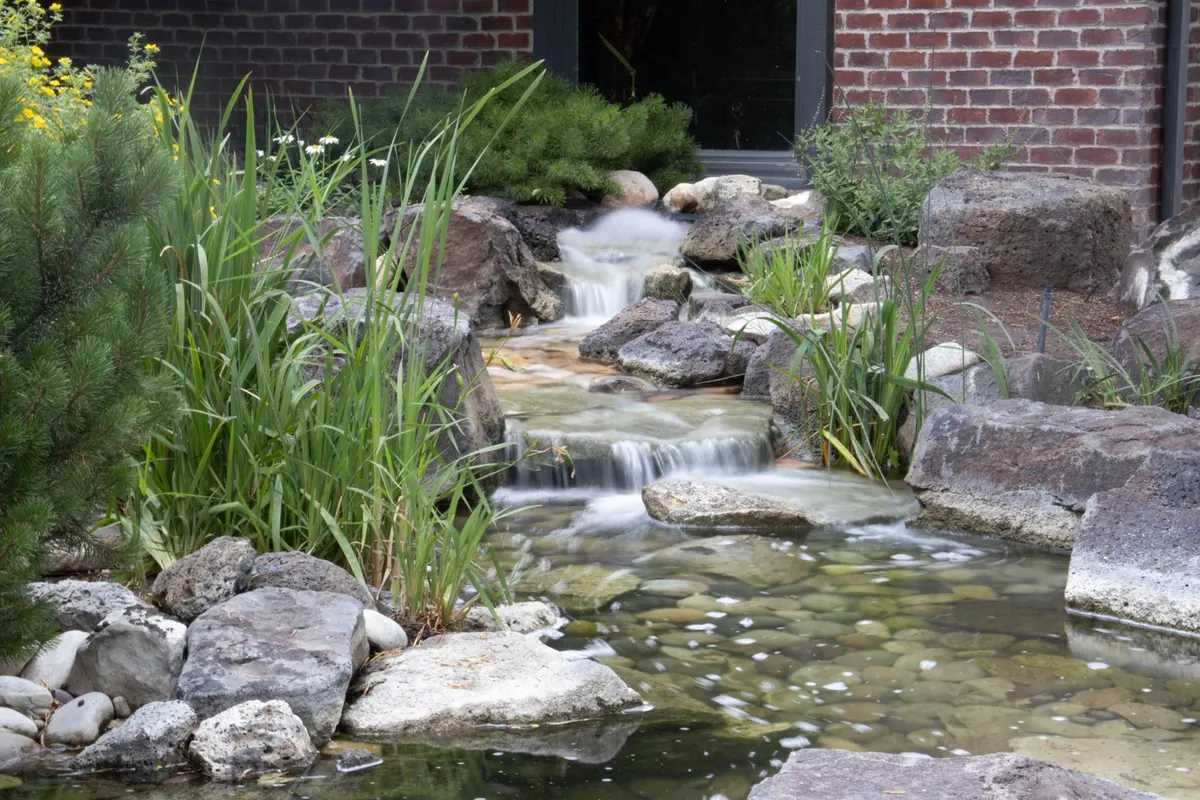
These grow in the shallows and provide cover, egg-laying sites and perches for emerging insects. Good choices include marsh marigold, water forget-me-not, brooklime, lesser spearwort, ragged robin and flowering rush. They also give dragonfly nymphs somewhere to climb out of the water when they are ready to transform into adults.
Floating plants
Small water lilies, frogbit and water crowfoot provide shade, which limits algae, and resting places for insects. Choose a miniature lily variety and keep it in a basket so it does not take over.
Avoid invasive species. Parrot's feather, floating pennywort, New Zealand pygmyweed and water fern can escape a garden pond and cause real damage in the wild. Check what is legal and non-invasive in your area before you buy, and never release pond plants or animals into the wild.
Making It a Haven: Shelter, Access and Homes
The pond itself is only half the habitat. The messy, undisturbed edges are just as important.
- A log pile or rockery beside the pond gives amphibians damp shelter during summer and a place to hibernate in winter.
- Long grass and leaf litter in one corner provide cover for frogs and nesting spots for insects. Resisting the urge to tidy up is a genuine wildlife strategy.
- A gravel beach sloping gently into the water makes a perfect drinking and bathing spot for birds and a basking area for bees.
- Insect hotels and hollow stems nearby increase the number of beneficial insects around the water.
- Avoid paving right up to the water's edge. Leave at least a strip of planting to act as a corridor between the pond and the rest of the garden.
What Wildlife to Expect, and When
- Late winter and early spring: frogs and toads arrive to spawn — frog spawn appears in jelly-like clumps, toad spawn in long strings. Newts return to the water too.
- Spring: marginal plants push up, water beetles and pond snails appear, tadpoles develop.
- Early summer: dragonfly and damselfly nymphs climb out on plant stems and emerge as winged adults. The first frogs leave the water.
- High summer: bees and hoverflies visit the margins for water, birds bathe, bats hunt at dusk.
- Autumn: leaves fall in. Remove some, leave some — the organic matter supports overwintering invertebrates.
- Winter: frogs, newts and insects hibernate in the mud and leaf litter. Do as little as possible.
Maintenance Through the Year
A good wildlife pond needs far less maintenance than a pond full of ornamental fish — but it does need the right kind at the right time.
- Spring: tidy the margins gently, remove dead plant growth by hand, top up with rainwater.
- Summer: thin out blanketweed if it becomes excessive. Twirl it around a stick and leave it on the pond edge for a day so that trapped creatures can crawl back in. Never use chemical algae treatments.
- Autumn: net out fallen leaves before they sink and rot. Keep an open area of water clear.
- Winter: never smash ice — the shock waves can kill hibernating amphibians. If you need to keep a hole open for birds, float a ball or a small piece of timber on the surface, or rest a pan of hot water on it.
Never empty and scrub a wildlife pond. That silty layer at the bottom is not dirt; it is the entire ecosystem. If you must remove silt, do it in early autumn and only ever take out a section at a time.
Common Mistakes to Avoid
- Adding fish. Even a few goldfish will eat frog spawn, tadpoles, insect larvae and just about everything else. Keep the pond fish-free if wildlife is your aim.
- Using tap water to fill. Rainwater is always better.
- Steep, slippery sides. Without an escape route, small animals drown.
- Over-feeding the pond. Leaf litter, fertiliser run-off and fish food all add nutrients and lead to algae.
- Over-cleaning. See above — a little mess is a feature, not a fault.
- Expecting instant results. A new pond is at its least interesting in month one. Give it a full year and it will surprise you.
Troubleshooting a New Pond
The water has turned green
This is normal in the first few weeks while plants are still establishing. Green water usually clears itself once oxygenators and marginals get going and start absorbing nutrients. To speed things up, add more submerged plants, shade part of the surface and remove any dead plant material.
No frogs yet
Be patient. Amphibians often take two or three years to find a new pond, especially if there is no other water nearby. Keeping a damp, planted corridor between your pond and the rest of the garden — rather than a wall of paving — gives them a route in.
There are midges or mosquitoes
Larvae need still, nutrient-rich water to thrive. In a balanced pond, dragonfly larvae, diving beetles, pond skaters and water boatmen will hunt them down. Avoid insecticides absolutely, and consider adding a small solar-powered fountain or a gentle bubble aerator, which disturbs the surface enough to deter egg-laying without turning the pond into a Jacuzzi.
The pond is losing water
Evaporation in summer is normal, especially in a small container. Top up with rainwater. A sudden drop that continues in cool weather may mean a torn liner or a cracked container.
The Small Garden Advantage
Small ponds have one genuine advantage over big ones: you can see everything. You will notice the first frog spawn of the year, the moment a damselfly emerges from its nymph case, the way a blackbird tips forward to bathe on a hot afternoon. Scale does not matter nearly as much as presence — a pond of any size, planted with natives, sited with care and left a little bit wild, will become the busiest square metre of your garden. Start with a barrel if that is all you have space for. Fill it with rainwater, drop in a bundle of hornwort, add a stone ramp, and wait. Nature does the rest.
Photo: Liz Earl / Pexels