
Container plants fail far more often from watering than from anything else. A pot on a sunny patio is a small, exposed root environment: the compost heats up, the wind pulls moisture off the leaves, and the roots cannot travel downwards to find a damper layer. Everything the plant drinks has to come from the volume of compost you gave it, topped up by you, often twice a day in July. Most of the mistakes below come from good intentions rather than neglect.
Mistake One: Little and Often
A quick splash every evening feels responsible. It is usually the opposite. Light watering wets only the top centimetre or two of compost, encouraging roots to stay near the surface, where they dry out fastest. The plant becomes more dependent on you, not less, and the deeper compost stays bone dry.
Water properly instead: pour slowly until water runs out of the drainage holes, then stop. That soaks the whole rootball and pushes stale air out. Depending on pot size, plant and weather, you might only need to do this once a day, or once every two or three days for a large pot in partial shade. Small hanging baskets may need it twice on a hot day.
Mistake Two: Watering at the Wrong Time
Midday watering in full sun is not fatal, whatever you have read, but a good deal of it evaporates before it reaches the roots, and splashing the foliage can scorch leaves in strong sun. Early morning is the best slot: the plant has water for the day ahead and any wet leaves dry quickly.
Evening is the practical second choice for many people, and it is fine if you water the compost rather than the leaves. Just be aware that foliage left wet overnight in still, humid weather can invite fungal problems, and slugs and snails do their best work in the dark.
Do Not Trust the Surface
A dry crust means very little. Compost can be dry on top and soaking wet an inch down, or it can have dried so hard that it repels water and lets it run down the gap between compost and pot wall without wetting the middle at all. Push a finger in to the second knuckle, or lift the pot and judge by weight. A pot that feels surprisingly light needs water; a heavy one does not.
Rain is the other false reassurance. A short shower wets the surface and little else, and pots under eaves, against a wall or beneath a tree canopy may get nothing at all.
Warning Signs of Overwatering
Overwatered plants wilt, which is confusing but logical: roots sitting in saturated compost cannot take up oxygen, so they shut down and the leaves droop. Look for yellowing lower leaves, soft or blackened stems, mould on the compost surface, a sour smell, fungus gnats, and water standing in the saucer.
The fix is simple and often urgent. Stop watering. Empty the saucer. Move the pot out of blazing sun for a day or two so it can drain and breathe. Check that the drainage holes are not blocked by a crock, a piece of plastic or a mat of roots, and if the compost has become a sour, sodden lump, repot into fresh compost and trim any brown, mushy roots.
Warning Signs of Underwatering
The other extreme looks like this: crisp brown leaf edges, curling leaves, flower buds dropping before they open, and compost shrinking away from the sides of the pot. A plant that wilts in the afternoon and recovers by evening is usually just hot; one that is still limp at dawn is dry.
If a pot has dried out badly, a normal watering will not fix it. Stand the whole pot in a bucket of water up to its rim for twenty to thirty minutes, until bubbles stop rising, then lift it out and let it drain. This is the only reliable way to re-wet a dried-out rootball.
Treating Every Pot the Same
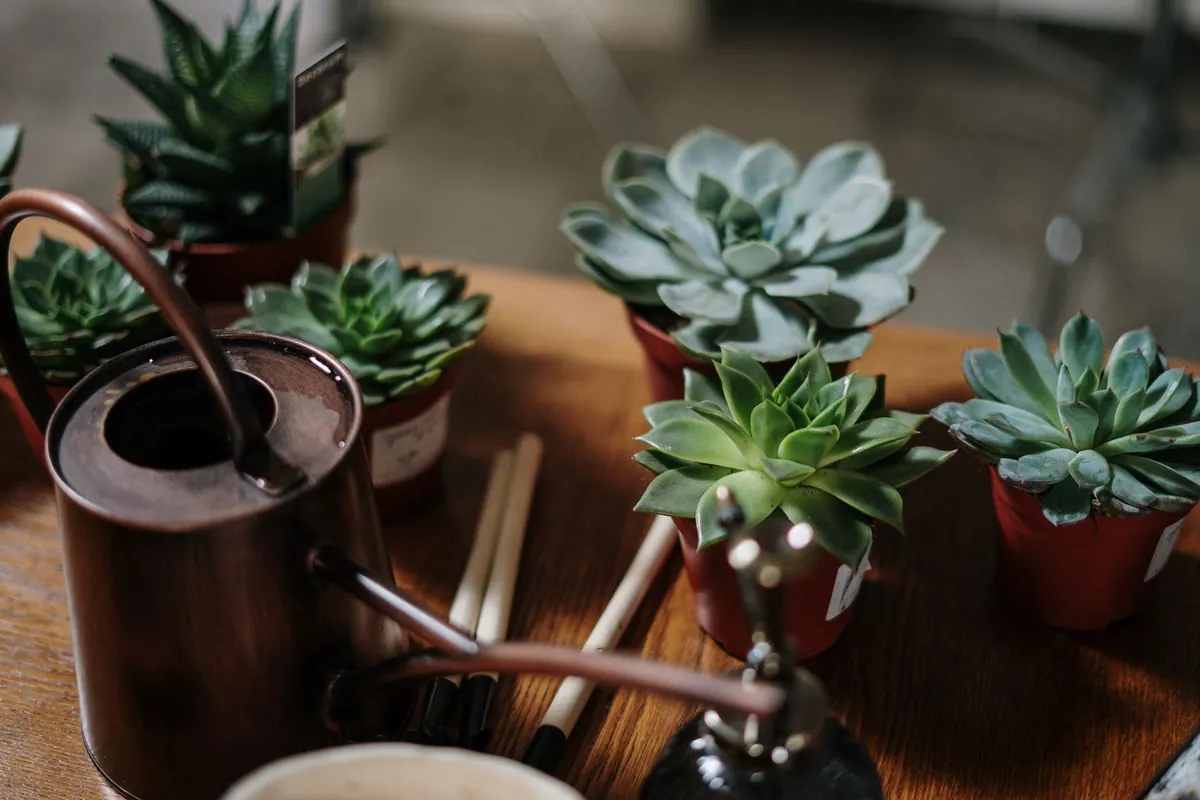
Watering needs vary wildly. Terracotta breathes and dries faster than glazed ceramic or plastic. Small pots and baskets dry in hours; a 40cm pot may hold enough for several days. A thirsty tomato or courgette needs far more than a rosemary or a sedum. Dark pots in full sun get hot enough to cook roots, which stresses a plant just as much as drought.
Simple Fixes Worth Doing Today
- Water thoroughly in the morning and let the excess drain away.
- Check before you pour, with a finger or by lifting the pot.
- Set small pots in a shallow tray of water for twenty minutes instead of topping up with a can.
- Mulch the surface with gravel, bark or wool compost to slow evaporation.
- Group pots together so they shade each other and share humidity.
- Move the thirstiest plants into light shade for the hottest part of the day.
- Double-pot: stand a smaller pot inside a larger one with a layer of compost or newspaper between them.
Feeding and watering are linked. Every time water runs through the pot, some nutrients go with it, so containers in active growth usually need a liquid feed every week or two through summer, following the dilution on the bottle. Do not feed a dry, wilting plant; water it first, or you risk scorching the roots.
A Routine That Actually Works
Ten minutes in the morning, before the day gets going, is enough for most patios. Walk round with a can, check each pot by weight or finger, water the dry ones properly, empty the saucers, and deadhead as you go. Twice a week, give everything a more generous soak and a feed. If you are going away, move pots into shade, group them together and stand them on a tray of damp gravel or capillary matting.
Get the watering right and most other container problems quietly disappear. Get it wrong, and no amount of feeding or pruning will rescue a plant whose roots are either drowning or parched.
Photo: cottonbro studio / Pexels