
Tomatoes are one of the few crops that genuinely repay the space a greenhouse takes up. Grown outdoors across most of the UK, they ripen late, split after heavy rain and often collapse with blight before the first truss has coloured. Under glass you control the two things that decide the crop: warmth and moisture.
You do not need a heated house or years of experience. A few reliable varieties, a decent growing bag or border, and a routine you actually keep to will give you fruit from July into October.
Choosing the right tomatoes for a UK greenhouse
Two decisions matter more than any other: cordon or bush, and how much blight resistance you want.
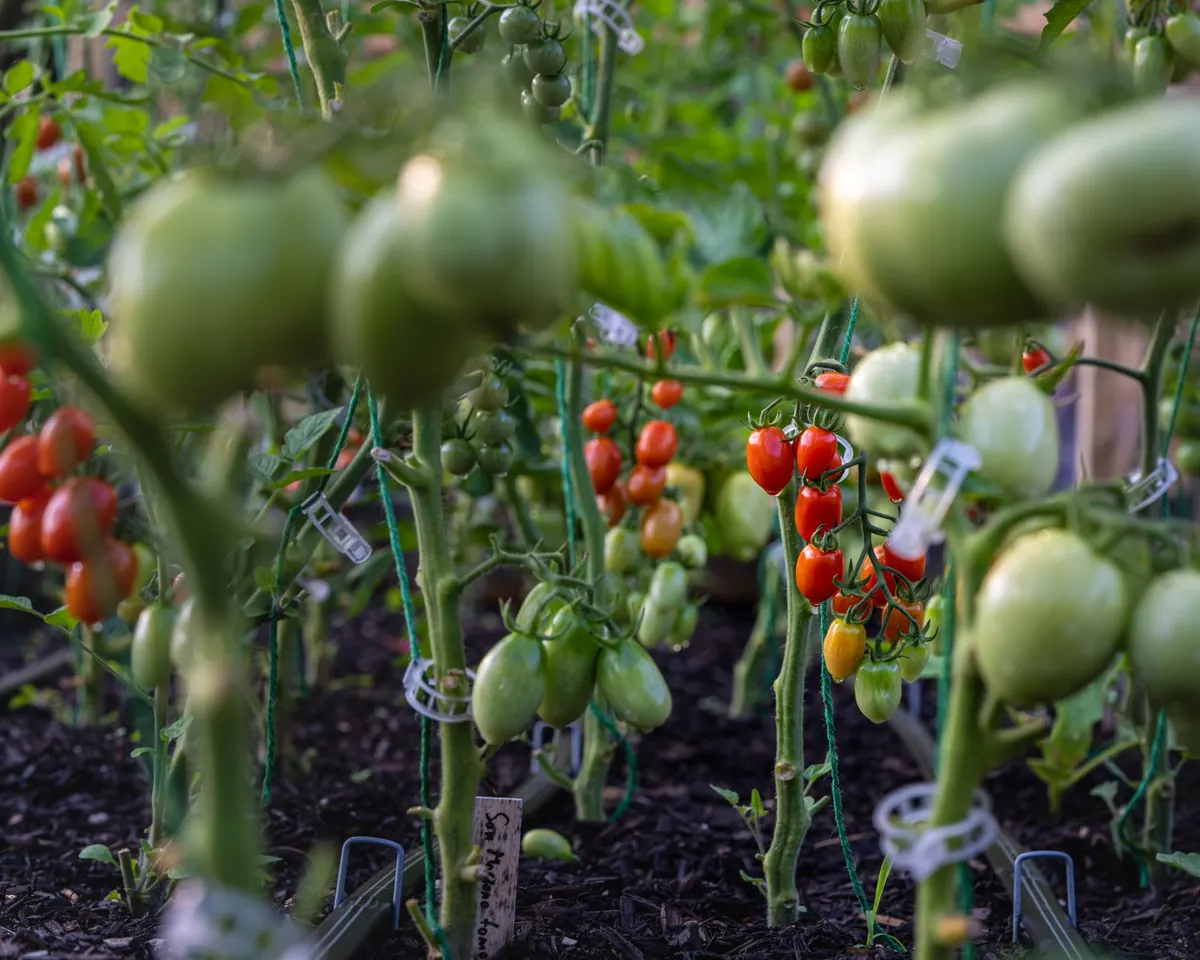
Cordon (indeterminate) varieties grow on one tall stem and crop for months. They suit a greenhouse best, because you can train them up a cane or string towards the roof. Bush (determinate) types stay compact, need almost no pruning and work well in grow bags or pots.
Blight resistance is worth paying for in the UK, particularly if you garden in the wetter west or grow a few plants outdoors as well.
- Gardener's Delight – a dependable cherry with good flavour and heavy trusses.
- Sungold – an orange cherry, exceptionally sweet; thin-skinned and prone to splitting, so water steadily.
- Shirley – a classic greenhouse slicer that sets fruit well in cooler conditions.
- Ferline or Crimson Crush – both bred with blight resistance in mind; useful insurance in a damp summer.
- Roma or San Marzano – plum types for sauces, passata and roasting.
F1 hybrids cost more per seed but give more uniform plants and often better disease resistance. If space is tight, grow two or three cherries for eating fresh and one plum for cooking.
Sowing under cover
Sow from late February to mid-March if you can give the seeds warmth. Wait until late March if your greenhouse is unheated and you have no propagator.
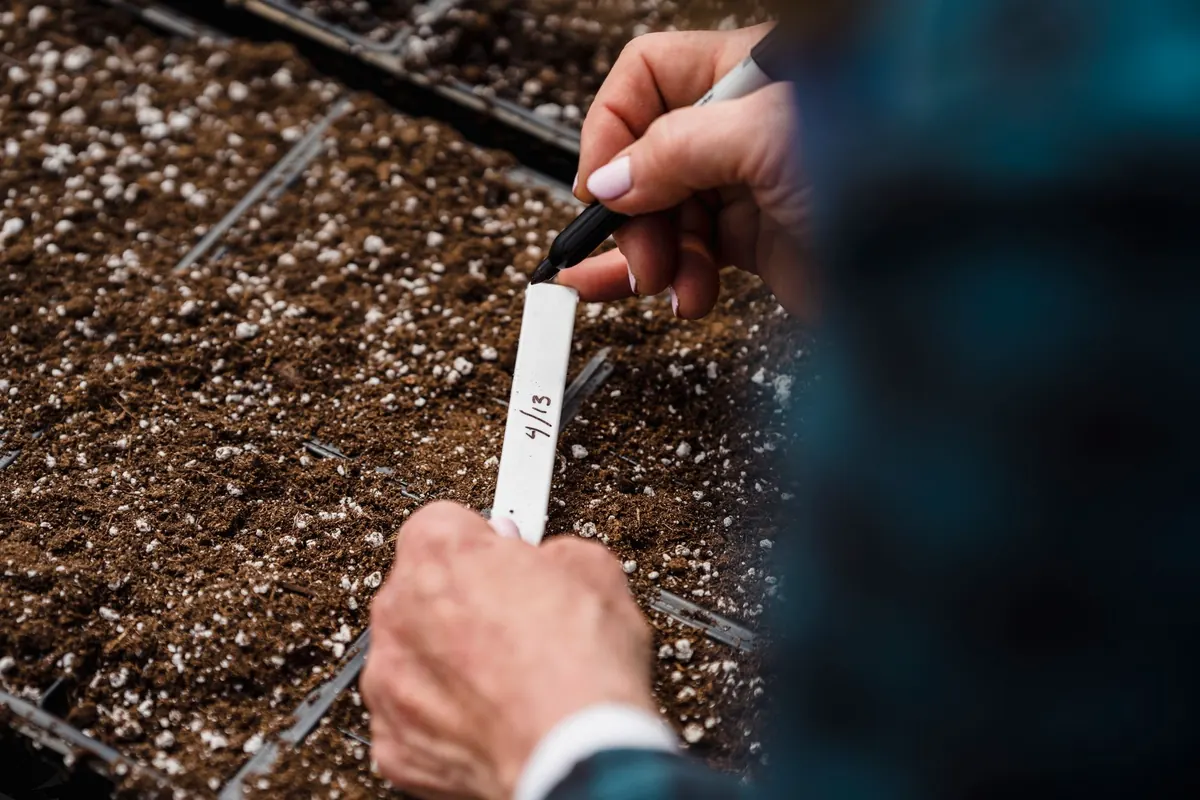
Fill small pots or a seed tray with moist seed compost, sow thinly at about 5mm deep, and keep them at roughly 18–21°C. A windowsill propagator does the job. Germination usually takes seven to fourteen days.
As soon as the first true leaves appear, prick the seedlings into 9cm pots, burying the stem slightly. Light matters most at this stage: a bright, frost-free spot keeps plants stocky rather than drawn and leggy.
Move them into larger pots as the roots fill each one, and harden them off for a week or so before planting into an unheated greenhouse. Aim to plant once night temperatures stay comfortably above about 10°C.
Planting into the greenhouse
Tomatoes are hungry, thirsty plants, so give them room and a decent root run. In a standard grow bag, two or three cordon plants is about right. In a border, work in plenty of well-rotted compost first. In pots, allow at least 10 litres for a bush type and more for a cordon.
Plant deeply, up to the lowest leaves — tomatoes root along a buried stem, which gives you a sturdier plant and more roots to feed it. Put the cane or string in place at planting time so you are not pushing it through roots later.
Allow 45–60cm between cordon plants and water the planting hole before firming the plant in. Space matters as much for airflow as for root room; crowding is the quickest route to mould.
Watering
Consistency beats quantity. Little and often is the wrong approach; a good soak every day or two, with the compost never drying right out, is what you want.
Water at the base, in the morning where possible, and keep the foliage dry. Wet leaves in a warm, still greenhouse are an invitation to grey mould.
In hot spells a cordon in a grow bag may take two litres or more a day; on dull days, far less. Push a finger into the compost before you water — if it is damp 2cm down, wait.
Erratic watering is one of the main triggers of blossom end rot, that sunken brown patch on the base of the fruit. Mulching the surface with compost or grass clippings helps even out the moisture.
Feeding
Start feeding when the first truss has set small fruits. Before that, a rich compost gives all the nitrogen the plant needs.
After that, use a high-potash tomato feed weekly, following the dilution on the bottle. Potash pushes flowers and fruit rather than leaf, which is exactly what you want once the plant is tall.
Do not be tempted to overfeed. Too much nitrogen gives you a magnificent leafy plant with very few tomatoes. If the leaves are deep green and curling and the trusses are sparse, ease off.
Training, ventilation and pollination
Cordons need one job repeating weekly: pinch out the side shoots that appear in the angle between leaf and stem. Left alone they turn into extra stems, block light and reduce the crop.
Tie the main stem to its support as it grows. Once four to six trusses have set, pinch out the growing tip in late summer so the plant puts its energy into ripening what it already has.
In a closed greenhouse there is no wind, so flowers are not pollinated. Tap each support gently at midday, or stroke the flowers with a soft brush, and you will get far better fruit set.
Ventilation does more for tomato health than any spray. Open vents and doors on warm mornings and close them mid-afternoon to hold the heat. Aim to keep the house below about 27°C with the air moving; if you cannot manage that, shade the glass with netting or a wash-on product.
Keeping blight at bay
Blight is the disease UK growers fear most. It arrives in warm, humid spells and shows as greasy grey-brown patches on leaves and stems that spread within days.
You cannot guarantee a season without it, but you can make the conditions far less welcoming:
- Water the soil, never the leaves.
- Space plants generously and strip the lowest leaves so air moves around the base.
- Keep the greenhouse ventilated and avoid damping down the floor on humid days.
- Remove any suspicious leaf immediately and bin it rather than composting it.
- Grow a resistant variety such as Crimson Crush or Ferline as insurance, especially for later crops.
Grey mould (botrytis) is the other common greenhouse problem, usually at damaged stems or where fruit has been left to rot. Keep picking, remove dead leaves and avoid overcrowding.
A simple weekly routine
Half an hour a week is usually enough. Work through these in order:
- Water thoroughly at the base, checking the compost first.
- Feed with a high-potash tomato food once fruit has set.
- Pinch out side shoots and tie in the main stem.
- Tap the supports to pollinate, and remove yellowing leaves below the first truss.
- Check leaf undersides for whitefly and new growth for the first signs of blight.
Stick to that rhythm and a UK greenhouse will give you tomatoes from midsummer until the light fades — far more than most gardeners manage outdoors.
Photo: Skyler Ewing / Pexels